Cupertino ADU Planning Tips for Your Property
Wondering if an ADU is the smartest upgrade for your Cupertino property? You might be weighing space for family, a long‑term rental, or a flexible studio that grows with your needs. The rules are friendly to small ADUs here, but timing, costs, and permitting still take planning. In this guide, you’ll learn what Cupertino allows, how permits work, what projects typically cost, and a simple checklist to start with confidence. Let’s dive in.
Cupertino follows state ADU law and offers clear local standards. Start with Cupertino’s ADU program to confirm your parcel and read current guidance.
Under state law, complete ADU applications that meet objective standards must be approved or denied within 60 days through a ministerial review. You can read the requirement in the California HCD ADU portal. Local plan‑check and building reviews still apply.
In practice, Cupertino’s Building Division reports average timeframes of about 20 to 30 business days for initial plan review and 10 to 20 business days for subsequent reviews, depending on volume. See the city’s permits page for current process notes and review cadence: Cupertino Building and Permits.
If you want to shorten design and plan‑check time, Cupertino offers a pre‑approved detached ADU plan program and a vendor list for qualifying valley‑floor parcels. This can be a faster and lower‑risk route for many homeowners. Learn more at the city’s Pre‑Approved ADU Plans page.
What to expect overall:
Choosing the format first helps you plan budget, timeline, and layout.
A garage conversion is often the least expensive and quickest path. You can reuse the existing building shell if the slab and structure are suitable. Replacement parking is not required for a conversion under city and state rules, which helps with both cost and design flexibility. This is a strong fit if you want a long‑term rental or a quiet guest space.
A JADU is 500 sq ft or less and must be created within your current home’s footprint. It is usually quicker and lower cost because you are not building new foundation or exterior walls. Cupertino requires owner occupancy in either the primary home or the JADU. Many owners use this layout for a compact studio, home office with a kitchenette, or a private suite.
An attached ADU adds space to your existing structure. It offers more layout freedom than a JADU but can trigger floor‑area or lot‑coverage limits unless you design within exemptions. Expect medium complexity and cost, since you are tying into the home’s structure and utilities.
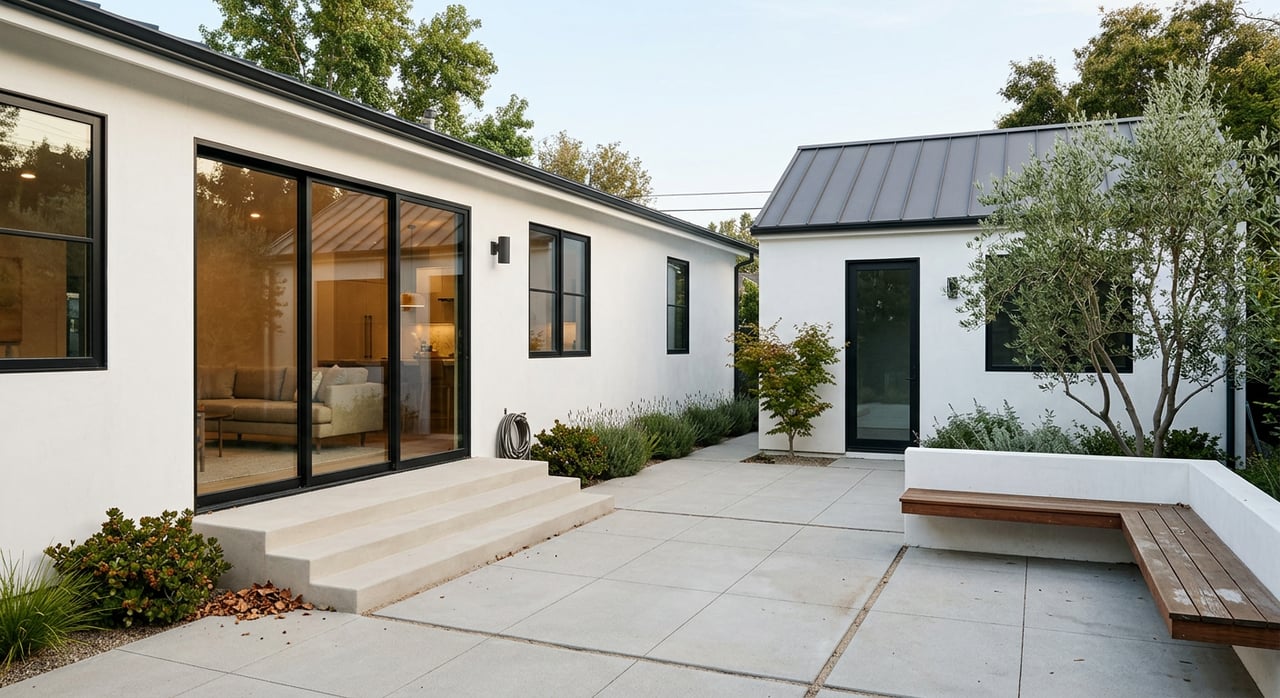
A detached ADU sits apart from the main home and offers the most privacy and design control. It typically has the highest cost due to foundation work, new utilities, and site work. The good news is that ADUs up to 800 sq ft receive setback and development standard relief in Cupertino. Two‑story options can be possible in certain circumstances under the 2024 ordinance update, so discuss height and placement early with Planning.
Bay Area ADU costs vary widely by scope and site. Research and practitioner reports show that permitted conversions often range from about $60,000 to $150,000, while detached new construction commonly lands in the mid‑$100,000s to several hundred thousand dollars depending on size, site conditions, and finishes. Expect Cupertino and Santa Clara County costs to skew higher than statewide medians due to labor and materials. For context and owner survey data, review the Terner Center ADU study.
Main cost drivers:
Tip: Price your project with two to three contractors and request line‑item contingencies for site unknowns. For smaller, straightforward detached layouts, Cupertino’s pre‑approved plans can reduce design spend and shorten plan‑check.
Homeowners usually fund ADUs with cash, a cash‑out refinance, a HELOC, a renovation loan, or a construction‑to‑permanent loan. Owner survey data show that financing access and experience vary, so it helps to work with lenders who know ADU timelines and draw schedules. The Terner Center ADU study outlines common financing paths and barriers homeowners report.
You can also explore state assistance. CalHFA has published an ADU Toolkit and has offered grant support for certain predevelopment costs when funding is available. Review the program materials here: CalHFA ADU Toolkit. Local nonprofits in Silicon Valley have also run ADU loan programs for eligible households. If financing is key, start that conversation early so your design matches budget and lender requirements.
In Santa Clara County, a new ADU is considered new construction for assessment. The Assessor will appraise the value of the ADU and add that amount to your property’s assessment. You should expect a supplemental assessment tied to the new unit’s value rather than a full reassessment of the entire property. For details, see the county’s guidance: Santa Clara County Assessor on new construction.
Insurance matters too. Notify your insurer before you start construction and again before you rent the unit. You may need to adjust coverage for the added structure and consider landlord liability if you plan a long‑term tenancy.
A permitted, code‑compliant ADU usually improves marketability because it adds legal living space and flexible use options. The actual resale premium depends on unit size, quality, permitted status, and the local rental market. Unpermitted units can limit buyer financing and reduce appeal, so keep your documentation in order. The Terner Center ADU study highlights why buyers value permitted units and how owners approach costs and benefits.
Across Santa Clara County, ADU production has been rising, reflecting strong homeowner interest and supportive state laws. For regional context and permit trends, see the resource hub from SV@Home: Secondary Dwelling Units overview.
If you plan to sell in the future, include plans, permits, final inspections, and current rent roll (if any) in your listing package. Buyers appreciate clarity, and it supports appraisals and underwriting.
An ADU can be a practical way to create flexible space and long‑term value in Cupertino. If you want room for extended stays, a quiet home studio, or a long‑term rental, the city’s small‑ADU exemptions and parking flexibility make many projects achievable. The key is matching the unit type to your lot, budget, and timeline, then building it by the book.
If you would like a second set of eyes on fit, cost, and resale impact, we are here to help. We can review your goals, connect you with trusted local vendors, and build a plan that aligns with your timeline and budget. Ready to talk through options for your property? Schedule a Free Home Strategy Call with Tim Alford.
Stay up to date on the latest real estate trends.
Get assistance in determining current property value, crafting a competitive offer, writing and negotiating a contract, and much more. Contact me today.