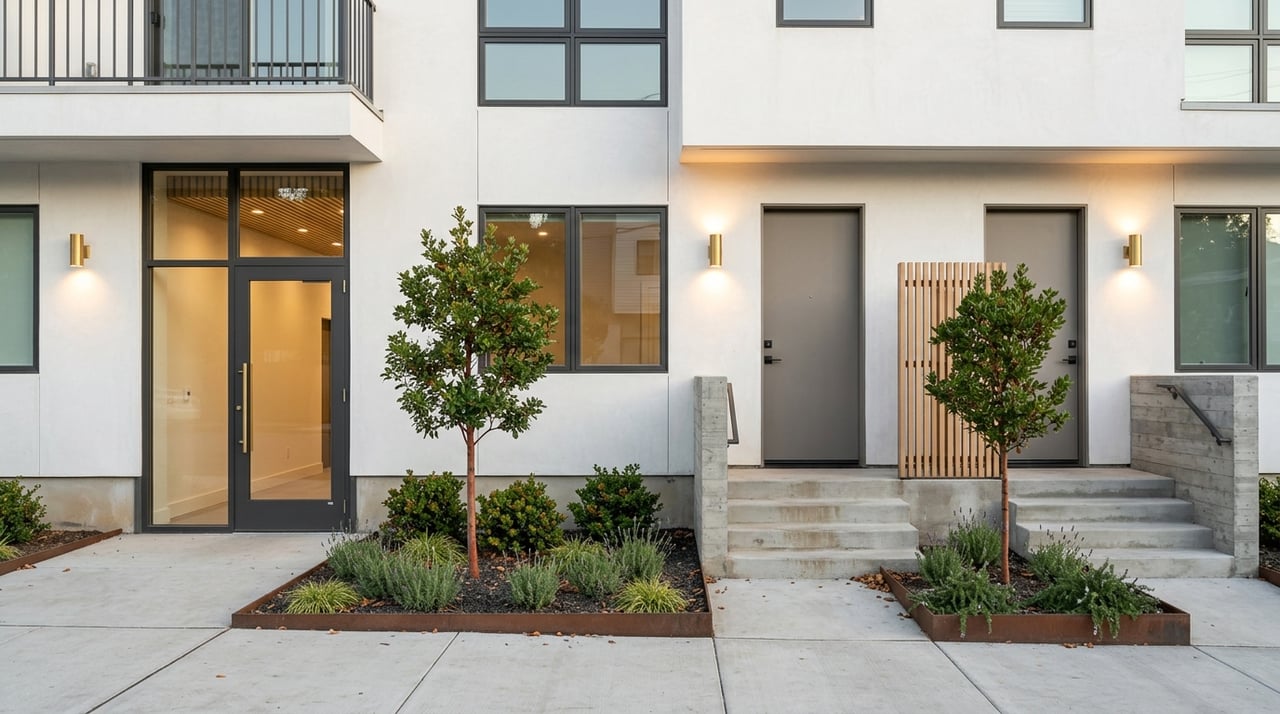
Comparing Condo And Townhome Living In Mountain View
If you’re deciding between a condo and a townhome in Mountain View, you’re not alone. Many buyers here want the right mix of budget, privacy, outdoor space, and commute convenience, but the choice is not always as simple as it sounds. The good news is that once you understand how ownership, layout, and location really work in Mountain View, the decision gets much clearer. Let’s dive in.
In Mountain View, the difference between a condo and a townhome is not always just about what the building looks like. In California, a townhouse is a building style, not necessarily a legal ownership type.
That means two homes that look very different on the outside can come with similar ownership structures, or two homes that look similar can have very different rules and responsibilities. Before you focus on style alone, it helps to understand what you are actually buying.
According to the California Land Title Association, a townhouse may legally be a condominium, a planned development unit, or another ownership form. The California Department of Real Estate also notes that common-interest developments can include both condos and planned developments.
For you as a buyer, the key takeaway is simple: the recorded title documents and CC&Rs matter more than the label in the listing. If you assume the building style tells the whole story, you can miss important details about maintenance, shared areas, and HOA authority.
In many condominium projects, you own your unit plus an interest in the common area. In planned developments, the HOA may own or maintain shared features like private streets, recreation areas, or other common improvements.
That is why one Mountain View condo or townhome community can feel very different from another. Your monthly costs, repair responsibilities, and day-to-day rules may depend heavily on the HOA documents, not just the floor plan.
A patio, balcony, or small yard may look private, but that does not always mean you fully own it in the same way you would own a yard with a detached home. The California DRE notes that many condo and planned-development communities use exclusive-use common areas.
In practical terms, that means you may have the right to use a space exclusively, even if it is technically part of the common area. If outdoor living matters to you, this is an important detail to confirm early.
Condos in Mountain View often appeal to buyers who want a lower price entry point and good access to major commute routes, downtown, or transit. Current listings show a wide range, from compact one-bedroom units to larger homes with multiple bedrooms.
Examples in the current market include a one-bedroom condo at 255 S Rengstorff Ave #58 listed at $399,000, a two-bedroom condo at 400 Ortega Ave #216 listed at $785,000, and a three-bedroom end-unit townhome-style condo at 2149 Junction Ave #10 listed at $1.35 million. That range shows just how broad the condo category can be.
Some buyers picture condos as small, single-level units only, but that is not always the case in Mountain View. Current inventory includes everything from modest starter options to larger attached homes with more bedrooms and more flexible layouts.
This makes condos worth a second look if you want to stay price-conscious without ruling out space completely. In some cases, a larger condo may give you much of the function you want at a lower cost than a typical townhome.
Privacy is often less about condo versus townhome and more about where the unit sits within the community. End units, corner units, and homes with fewer shared walls often feel more private and bring in more natural light.
Current Mountain View listings highlight that point clearly. An end-unit townhome-style condo may offer extra windows and no neighbor on one side, while a corner condo may have only one shared wall and a private balcony.
Townhomes in Mountain View often feel more house-like. Many current listings emphasize multi-level living, more square footage, and layouts that separate living and sleeping areas more clearly.
Examples on the market include 824 Bay St at about $1.088 million, 1257 Verano Rd at about $1.618 million, 474 Kahlo St at about $1.648 million, and 220 Sierra Vista Ave at about $1.968 million. These homes show the wider floor plans and higher pricing many buyers associate with the townhome segment.
If you want more defined space, a townhome may be a better fit. Multiple levels can create a more traditional home feel, especially if you work from home, need extra bedrooms, or simply prefer more separation between common areas and private rooms.
That said, the tradeoff is usually price. In Mountain View, buyers often pay a meaningful premium for that extra space and house-like layout.
Even with townhomes, outdoor space in Mountain View is often more about usability than size. Listings commonly feature private balconies, patios, sheltered outdoor areas, or access to common open space rather than large private yards.
For many buyers, that works well. You get some outdoor access without taking on the upkeep of a larger lot.
Price is one of the clearest dividing lines in this comparison. Based on current market snapshots, Mountain View condos have a median listing price of about $786,000, while townhomes have a median listing price of about $1.5 million.
That gap is significant. It helps explain why condos often attract buyers focused on entry price, while townhomes tend to appeal to buyers who are willing to pay more for added space and privacy cues.
Mountain View condo pricing is not one-size-fits-all. Current active examples range from $399,000 for a one-bedroom unit at 255 S Rengstorff Ave #58 to $1.83 million for a four-bedroom, 3.5-bath home at 560 S Rengstorff Ave.
Between those ends of the market, several two-bedroom condos sit roughly in the high-$600,000s to high-$700,000s. Larger units or homes in more sought-after locations can move well above that range.
Townhomes also vary, but the starting point is typically higher. Current examples begin around $1.09 million and extend into roughly the $2 million-plus range for newer plan homes.
If your budget allows for it, that premium may buy you more space and a layout that feels closer to a single-family home. If budget is tighter, condos may offer a more realistic path into Mountain View homeownership.
For many Mountain View buyers, lifestyle and commute matter just as much as the floor plan. That is especially true if you want to stay close to transit, major roads, or daily conveniences.
The city notes that Mountain View offers access to U.S. 101, Highway 85, State Route 237, El Camino Real, and Central Expressway. For buyers balancing work, home, and time, that transportation network can make attached housing especially appealing.
Downtown Mountain View is one of the clearest choices for buyers who value walkability and transit access. The city describes downtown as a mixed-use, walkable center along Castro Street between Evelyn Avenue and El Camino Real, with restaurants, shopping, performing arts, a civic center, and a plaza.
The Mountain View Transit Center is a major local hub. The city says it handles more than 12,000 boardings and alightings on a typical weekday and provides direct access to downtown.
Mountain View planning documents show that newer condo and townhome product is often concentrated in Downtown, North Bayshore, East Whisman, San Antonio, and along El Camino Real. These are areas where buyers are more likely to see newer attached housing and stronger multimodal connectivity.
That matters because the right home type for you may also depend on where you want to live within the city. If transit and mixed-use convenience are priorities, these planning areas deserve close attention.
Attached-home buyers often prioritize easy access to everyday amenities. In Mountain View, that can include downtown services, the Mountain View Public Library at 585 Franklin Street, and Shoreline at Mountain View, a 750-acre park with trails, a sailing lake, golf, a dog park, picnic space, and restaurants.
These amenities help explain why condos and townhomes are such a strong fit for buyers who want convenience and lower-maintenance living. In many cases, the surrounding environment is just as important as the home itself.
In broad terms, condos in Mountain View tend to fit buyers who want a lower entry price and strong access to downtown or transit. Townhomes tend to fit buyers who want more bedrooms, multi-level living, and stronger privacy cues.
Still, these are tendencies, not rules. A well-placed end-unit condo may feel more private than an interior townhome, and a larger condo may function better for your needs than a smaller, more expensive townhome.
Before you choose, it can help to think through a few practical questions:
No matter which property type you prefer, document review is essential. In California HOA communities, the CC&Rs, budget, and maintenance responsibilities can affect everything from roofs and exteriors to landscaping, parking areas, private streets, and amenities.
That review is especially important in Mountain View, where both newer transit-oriented projects and older attached communities can have very different ownership and maintenance structures. A careful read of the documents can help you avoid surprises and compare homes more accurately.
If you want help weighing condos against townhomes in Mountain View, Tim Alford can help you sort through pricing, layout tradeoffs, and the fine print so you can buy with more clarity and confidence.
Stay up to date on the latest real estate trends.

Get assistance in determining current property value, crafting a competitive offer, writing and negotiating a contract, and much more. Contact me today.